-9/11
-Obama inauguration
-Phillies win World Series
-Invasion of Iraq and Afghanistan
-Formation/independence of Kosevo, South Ossestia
Wednesday, May 6, 2009

Tuesday, April 28, 2009
Dirty Mouth
Personally, I am not phased by occasional swearing in a book. In real life, it is not uncommon to hear quite a bit of swearing in casual conversations between friends. If the author wants to replicate this in a book, I have no problem with it. To try to be realistic, sometimes an author must add this. When the author adds it too much though, to the point where it gets to repetitive, it can get annoying.
Monday, April 27, 2009
Independent Reading 1
So far in my book, Jimmy Carter has just outlined the major problems of the Israeli - Palestinian conflict. He noted the main nations and factions involved, and mentioned each one's goals, concerns, and histories regarding the conflict. I am looking forward to reading this book. I believe that I will learn a lot from it, and maybe develop a new perspective on the issue. I will be more informed when discussing the topic and will have a better understanding when I see conflict due to this problem on the news.
Thursday, April 23, 2009
Free Write
Gunshots rang through the air, and I immediately ran for cover. Before looking for the ambushers, I looked to see how my platoon was holding up. Luckily we had not sustained any casualties yet. The ambushers were concentrating their fire across the river where two of our men were hiding behind a rock, separated from the rest of the platoon. They were exposed from the back, and were in a very dangerous position. I knew they didn't have much time. To get to the attackers, I left my cover and tried to flank them from behind.
Tuesday, April 21, 2009
Walk the line
When a person experiences or witnesses a traumatic, monumental, or life - changing event, I feel as if they would want the world to know. They would want people to know that these occurances actually do happen and that there are many people in the world who truly do have pressing issues to deal with. When an author publishes a book that includes these sort of events, it opens up the reader's eyes to the reality that less fortunate people are living. It lets the reader see the world through someone else's eyes.
Wednesday, April 15, 2009
to atone...
I believe that atonement for past sins is possible. I think that a simple apology can go a long way. Addressing a past wrongdoing or sin is a noble deed and is much more beneficial than doing nothing and hoping that the action gets forgotten by itself. In my younger years, I had an acquaintance that my friends and I used to pick on. Even at the time, I realized that what I was doing was wrong but I never did anything about it or addressed it. Several years later, I went and apologized for my past actions. Peace was made between us, and we both felt better afterwards.
Tuesday, April 14, 2009
Decisions
I often make decisions based on my gut feeling about something. Occasionally I will even stop and think them through. I also tend to procrastinate important decisions. When I say I am thinking them through, I really am just delaying until the last minute. An example of that is me picking a college. It is a big decision that will greatly affect the next 4 years of my life, and I have been delaying making it.
Monday, March 30, 2009
Independent Reading Prompt 8
After some research on J.R.R. Tolkien, I found out that he was not a fan of allegories or deeper meanings in his works. He was a writer whose main focus was just to tell a good story. Yet, after reading the book I was able to pick up on one underlying prevalent theme in "The Hobbit:" No matter how small or insignificant you seem or are made out to be, you can always do something great to be remembered. Tolkien conveyed this theme by picking Bilbo to be a mere hobbit rather than a dwarf, a man, or an elf. Smaller and weaker than almost every race of Middle Earth, Bilbo saved his friends many times and basically insured that the quest was successful. He did all this even though very few people believed in him. The dwarfs saw him as a burden at first, the other hobbits did not like his adventuring, and his foes did not take him seriously. Even Bilbo did not believe in himself at the start of the quest and only embarked on it because he was forced to by Gandalf. It was not until Bilbo was put in extreme circumstances before he realized his potential.
Independent Reading Prompt 18
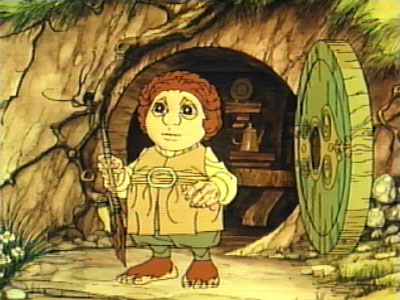
Although very simple, I believe that "The Hobbit" is a perfect name for Tolkien's book. In the beginning of the book, Tolkien gives his description of a hobbit. He says it is a very peculiar creature, but is filled with many hidden talents. He mentions that they have always been overlooked, but yet they remain wise and clever. No one in Middle Earth, except for Gandalf, expected anything great from a hobbit, but Bilbo proved everybody wrong. This is what makes his acheivments as a hobbit more special than if he were a man, an elf, or a dwarf.
Independent Reading Prompt 16
There are obviously vast differences between "The Hobbit" and "The Motorcycle Diaries." One takes place in a fantasy world hundreds of years ago and the other is a non-fiction diary of a to be revolutionary. Yet, they have many similarities as well. For one, the main characters in each book embark on a life - changing journey of self realization. The youthful, optimistic Ernesto was certainly not the same man by the end of the trip. The suffering he saw caused him to forever change his views and ultimately his life. Bilbo Baggins had a similar experience. Before he embarked on his quest he was ignorant of the world around him , and he was perfectly content with that. He was also ignorant of his own potential. If it was not for his adventure, he probably would have spent the rest of his life residing in the Shire. The quest he embarked on helped him realize his true potential as a very talented and bold explorer. His life too was forever changed after his quest.
Independent Reading Prompt 12 Chapter 7

This chapter starts off after everyone successfully escaped and regrouped from the goblin caves and are making their descent from the Misty Mountains. Gandalf mentions a mysterious being that lives in the area that he plans to visit. This person is Beorn. Beorn is a shape shifter and spends his time as either a very large man or an even larger bear. From his description and his actions, one can imply that he is sort of the protector of nature. Besides being friendly to the travelers (after much suspicion first), and providing them a place to stay, he does not serve much purpose to the plot. The reason I think that Tolkien included this mysterious but commanding creature was to loop in a theme: The dwarfs and the hobbit respected nature and all the plants and animals they encountered. The goblins on the other hand (who Beorn later ripped apart) did not. The ones that lived harmoniously with nature were protected by Beorn and helped along their way.
Independent Reading Prompt 7 Chapter 13
It turns out that my predictions from the previous post were correct. Bilbo re-enters the mountain and this time talks to the dragon face to face, although he still is invisible. He gives away some vital information though, hinting that he came from the town of men nearby. Smaug picks up on this hint and leaves to go burn down the town. Bilbo's lack of planing resulted in a possible catastrophe.
Independent Reading Prompt 6 Chapter 12
After finally getting into Lonely Mountain unnoticed, the dwarfs selected Bilbo to go take a look around, and possibly steal treasure. Even though he is invisible with the ring, Bilbo is horrified when he sees the sleeping dragon. He does manage to take a golden cup, then bring it back to the dwarfs. The dragon does wake up and take notice. I believe that Bilbo made a mistake by going in without a solid plan. The dragon will surely take vengeance on the dwarfs. I would not be surprised if the dragon would even go out of his way and inflict damage on nearby areas such as the town on the Long Lake.
Independent Reading Prompt 14 Chapter 5
"There is a lot more in him than you guess, and a deal more than he has any idea of himself."
This quote was said by Gandalf regarding Bilbo. From the beginning the dwarfs questioned Bilbo's ability to embark on an adventure considering he lacked many survival skills and fainted at the idea of leaving the Shire. Even Bilbo did not have faith in himself. Gandalf was the only one who saw the potential that Bilbo had. Later on in the book, he proved Gandalf right, using both his wit and physical ability to save the dwarfs many times and ensure a successful quest.
This quote was said by Gandalf regarding Bilbo. From the beginning the dwarfs questioned Bilbo's ability to embark on an adventure considering he lacked many survival skills and fainted at the idea of leaving the Shire. Even Bilbo did not have faith in himself. Gandalf was the only one who saw the potential that Bilbo had. Later on in the book, he proved Gandalf right, using both his wit and physical ability to save the dwarfs many times and ensure a successful quest.
Independent Reading Prompt 1 Chapter 1

The title to the first chapter of the book is calles "An Unexpected Party." It references the visit of Gandalf and the 12 dwarfs that unexpectedly showed up at Bilbo's hole and stayed the night. Even more intrusive, they basically forced the unwilling hobbit to join them on their dangerous adventure. Regardless, they party had a joyful evening filled with a feast, stories, and music. The whole atmosphere was a jubilant one, and made me wish I was present at the festivities. The warm spring evening that was described made me long for warmer weather.
Independent Reading Prompt 4 Chapter 8
I was very surprised by the bravery that Bilbo displayed in this chapter. While lost in the darkness of Mirkwood forest, he and his dwarf companions were tied up in a web by giant spiders. Bilbo broke free and killed the nearest spider before turning invisible and wreaking havoc upon the predators. After outsmarting them while invisible, Bilbo then took off his ring and proceeded to free his friends and kill more spiders. Before this chapter, Bilbo had been kind of pathetic in terms of strength and survival. He constantly needed to be carried when they were running from goblins. This was the first time that he really showed the doubtful dwarfs how much of an asset he really was. It was also the first time he put aside his own needs (like hunger) and acted for the good of the group.
Independent Reading Prompt 11
I really enjoy J.R.R. Tolkien's voice and writing style in "The Hobbit." Compared to the "Lord of the Rings" trilogy that I previously had read, it had much more of a lighthearted tone. The whole premise of the adventure was for glory and for the sake of adventure, compared to Frodo's where the fate of Middle Earth lied on the success of his quest. Tolkien narrates the story in a way that a grandfather would read a story to his grandchildren. He throws in many of his own points and inquisitions (many in parentheses), and this just adds to the whole lightheartedness of the story. Yet, it has its climactic points and remains very interesting to read.
Tuesday, March 24, 2009
TMD write your own DO NOW

MLK, Gandhi, and Nelson Mandela all were revolutionaries just like Che was. The difference was that they carried out their agendas in a peaceful manner.
Che never even considered a non-violent revolution. Do you think he could have been succesful if he tried? Do you think his legacy would have been any different?
I chose to ask this question because I do believe that Che had noble intentions. If he would have carried them out differently, I wonder if he would have had a more lasting impact and a better image.
Tuesday, March 17, 2009
Columbia & Venezuala
The speech at the end of the book was given by a man whose name is not given. Ernesto describes the man in a third person tense. I think that the man Ernesto was describing was in fact himself. I think that the speech was the defining moment when the innocent and caring Ernesto turned into the powerful revolutionary Che. He spoke of innocent lives lost as a part of the revolution and said that anyone not willing to join them would die. These harsh words would not have come out of Ernesto's mouth, but were the ways of Che.
Thursday, March 12, 2009
Theme Introduction
The LEO thesis statement page was probably the most helpful for me. The rules to writing a thesis statement were short and to the point. The site also provided many helpful examples that went along with the point they were trying to convey.
My Thesis:
Ernesto Guevara set out to create a unified Latin American society where the people would be cared for, treated equally, and not exploited; but his inflexibility, his lack of realism, and his actions after the Cuban Revolution caused his goals to fail and his image to be stained.
My Thesis:
Ernesto Guevara set out to create a unified Latin American society where the people would be cared for, treated equally, and not exploited; but his inflexibility, his lack of realism, and his actions after the Cuban Revolution caused his goals to fail and his image to be stained.
Tuesday, March 10, 2009
Peru Diction Quiz
Ernesto’s journey through Peru begins with him abandoning his transportation and walking through the DESOLATE landscape by foot. The BEASTIAL cold takes a toll on them as they travel through the night, but then they come across a truck carrying “human livestock.” The truck is filled with the Indians, and it takes them to a DESOLATE village in the mountains that looks like one that their ancestors would have lived in hundreds of years ago. The people there had become glum and FATALISTIC, excepting the troubles and injustices that BEFELL them long ago when their people were conquered by the Spanish. Being a social INTERLOCUTOR, Ernesto engages in conversation with an Indian school teacher that lost his job for defying the Latin Americans’ oppressive ways. The man goes off on a TIRADE, telling Ernesto how he ABHORS the MESTIZOS who enslaved the Indians even though they had blood ties to the Indians as well. Ernesto’s spirits are dampened again when he visits Machu Picchu and sees the city that was once great, but is now nothing but an ancient RELIC, thanks to the conquistadors who sacked the city long ago. Ernesto feels sympathetic for the constant LESIONS the native Indians had endured all these years. This is certainly not all the suffering Ernesto sees in Peru. Everywhere in Peru he goes, from Lima to the leper colonies, he is questioned by poor about his wonderful Argentina, the "Land of Peron."
Monday, March 9, 2009
Who did Ernesto want to become?
Ernesto wanted to be a liberator of his people. He wanted a united, Utopian Latin America where everyone worked together, for the well being of everyone. He wanted a Latin America to become a place free of oppression and exploitation. He did not want Latin America to look like Soviet Russia though. He wanted the government to help the people rise up, not oppress them like the Soviet dictators did to their people. He proved this when he insulted them when in the Cuban government, even though they were Cuba's closest ally. In fact, I believe that Ernesto wanted Latin America to become a society where there was no need for any president or dictator.
Wednesday, March 4, 2009
Chile
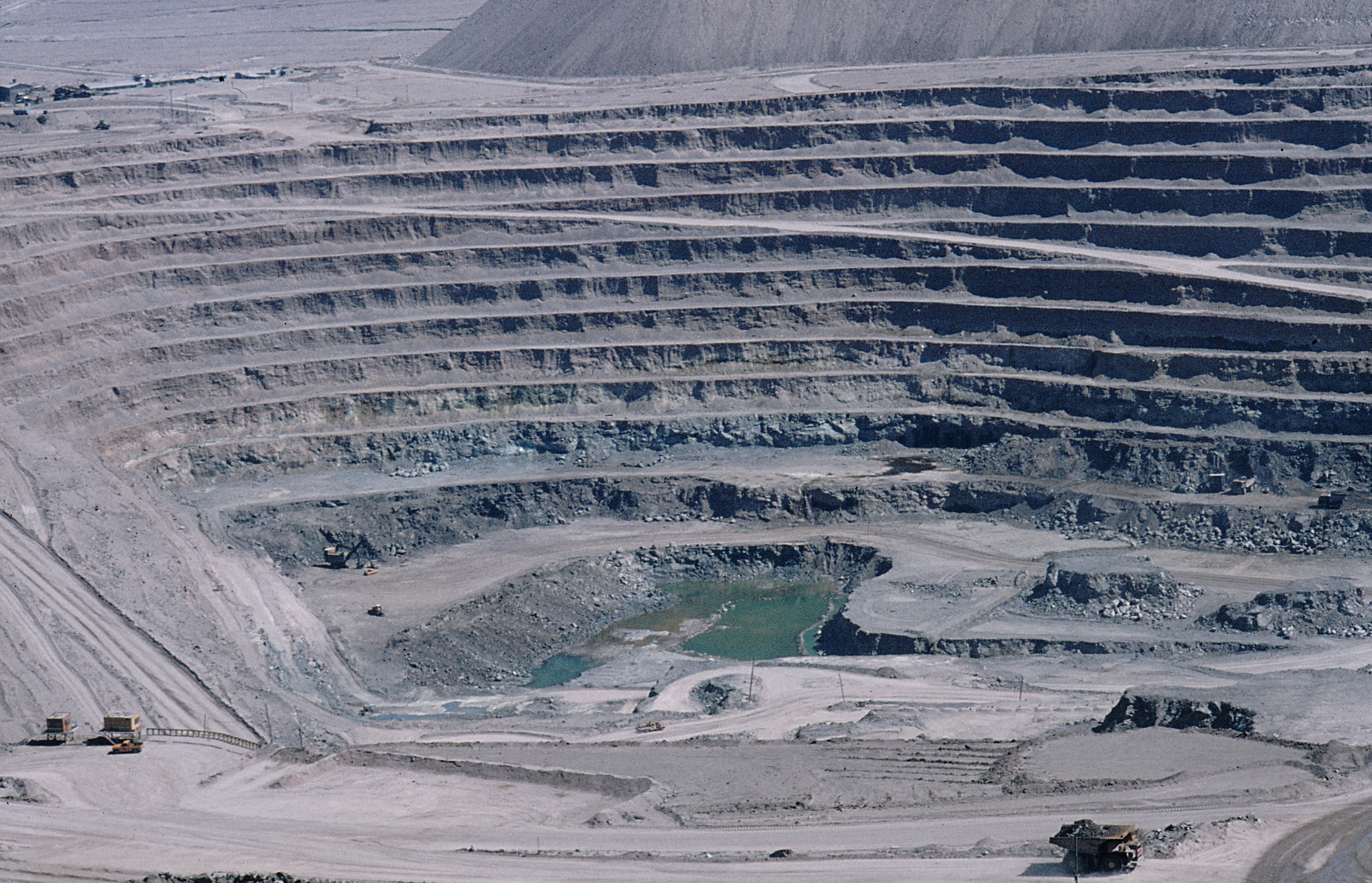
Ernesto's experience seeing the Chileans in the copper plants is something that really had an effect on his political views. He saw the people that he had much admiration for being exploited by working hard and earning meager pay. He saw this as injustice, and it probably caused him to dislike capitalism and lean towards socialism, where he believed workers would not be exploited that way.
"This is a crude summary of the manufacturing process, which employs a floating population of 3,000 souls."
Friday, February 27, 2009
Thursday, February 26, 2009
Apples to apples

The article I read talked about the US's secret involvement in Pakistan, and how we are training militants how to hunt down suspected terrorists. I was not surprised at all by this article considering that the US has intervened in foreign countries much worse in the past. For example, we have been training Latin Americans for the last 50 years to fight any government or political party that the US did not approve of. In the 1960s we supported and funded the overthrow of the democratically elected government in El Salvidor. In the 1980s we orchestrated the overthrow of Nicaragua's socialist government that was liked by the people. In the process, we trained the contras that committed several human rights violations and massacres of innocent Nicaraguans. Also we orchestrated the unsuccessful Bay of Pigs invasion in the 1960s.
Forcing revolutions and meddling in foreign countries who do not want it is unacceptable when both America and Che do it. If the people of a country want a revolution or a new government, let it come from that country, not an outside source.
Tuesday, February 24, 2009
Argentina
Ernesto’s voice was very laid back, honest, and matter-of-a-fact. His voice had slight humbleness to it as well, as he confessed in the very first sentence that he was no hero. His whole mentality was youthful and optimistic towards his journey. He was very eager to leave medical school and exams, and travel on the open road. One thing that I did not like about the voice of the writing was its “choppiness.” He did not always elaborate, or even finish talking about one thing before stopping and moving to the next. Also, he mentioned many seemingly insignificant events without mentioning if they had any relevance or importance. This choppiness made the first section a little difficult to get through.
Friday, February 20, 2009
Hemingway Poem
“For Sale. Baby Shoes. Never Worn.” -Ernest Hemingway
I believe that this poem is referring to a couple having to sell baby stuff because they were expecting to have a baby but there was a miscarriage. Now they do not have a baby, but they do have baby stuff to remind them of what could have been, so they must sell it all. It is a short but depressing poem.
I believe that this poem is referring to a couple having to sell baby stuff because they were expecting to have a baby but there was a miscarriage. Now they do not have a baby, but they do have baby stuff to remind them of what could have been, so they must sell it all. It is a short but depressing poem.
Thursday, February 19, 2009
Essential Question
By the time I get old, I would like to have become extremely wise. I see the next few years in my life becoming a quest for knowledge and understanding. Besides that, I have no certain plan for my life, nor have I outlined a specific set of goals like becoming rich or something of the sort. Along my way through life, I will try to help people around me however I can. I hope to stand up for those who can not stand up for themselves, and be part in creating a society where everyone is represented and looked after.
Tuesday, February 17, 2009
TMD intro

There is nothing more lonelier than an adventure, but it is a good kind of loneliness. You become free of social restrictions, boundaries, and worries and are free to do whatever you want. You set your own objective and can carry it out any way necessary. You can see and interpret things your own way, free from the input of others. You are free to truly be yourself. But like everything else, an adventure must end sometime.
Thursday, February 12, 2009
Ideology
There are many beliefs that I would go to great lengths to defend. One of the important ones is the freedoms given by the First Amendment in our Constitution. I do not believe that anyone should be jailed or persecuted because of their thought, beliefs, or religion. If I ever saw an unjust abuse of power violating these rights, I would call it out and defend the victim. I would probably not give my life to protect these freedoms. If the government somehow ever became fascist in the future and seriously violated the First Amendment, I would join protests, knowing the consequences of this action.
Tuesday, February 10, 2009
"El Che"
I enjoyed the movie about Che Guevara. It really contradicted the Che that Glenn Beck described. Before the movie, I had some background knowledge about Che and his association with Fidel Castro, but I had no idea about the odds their guerrilla group had to overcome. The movie pictured the revolution to be a glorious one of the people, so it makes me wonder if America's negative perception of Cuba today is just because of its political ideology.
Friday, February 6, 2009
Das Capital meets Easy Rider
From the quote Das Capital meets Easy Rider, you can get a pretty good idea of what TMD is all about. Das Capital talks about the exploitation of workers in a capitalist economy. Easy Rider is all about a motorcycle adventure between two men who discover a lot about themselves and society. When I mixed the two together, I came up with this prediction: Ernesto and a friend go out on a motorcycle adventure and come across the indigenous people where they see how they are exploited and realize the lack of morals involved with capitalism.
Thursday, February 5, 2009
TMD Bio & Intro post
I am sure that I have read a plenty of memoirs, but do not remember them all. One that I recently read was "Night." When I read the book, I felt a connection to the author, and was hoping that he would get out alive the whole time I was reading. If I like TMD, I am sure that I will also connect to Ernesto and develop a new perspective on him.
Wednesday, February 4, 2009
TMD preface comparison
Both the "Great Gatsby" and "Invisible Man" gave the reader an excellent view on what times were like when the authors wrote their books. They depicted the social atmosphere and mentality of their respective eras. The greed, the lavishness, and the extravagance of 1920s New York was displayed in Fitzgerald's novel. Gatsby's parties, and Tom's relationship with his wife and his mistress illustrated the fakeness at the time. Ellison's novel depicted the racial injustices in the the 1950s both in the big cities and the South.
Tuesday, February 3, 2009
Epiphany
An Epiphany is a realization of something that can be potentially life changing. An epiphany can cause a person to completely change his/her goals and lifestyle.
Monday, February 2, 2009
Glenn Beck's perspective of Che
In his show, Glenn Beck gave a bias, negative, and sarcastic description of Che Guevara. He compared him with Hitler and Stalin, history's most evil men. He called everyone who supported him either a communist or an idiot. He wonders how anyone can possible idealize, or even admire a man like Che Guevara who stands for everything evil and communist.
One must think that something must have been great about Che for him to be admired so much. He is loved because he was a revolutionary who helped overthrow the oppressive regime of Fulgencio Batista, the American supported dictator who was hated in Cuba. He helped lead a revolution for the people against a puppet government that Batista ruled from his luxurious estate in Florida. Americans in power like Glenn Beck hate Che because he went against the will that America tried to impose on others.
One must think that something must have been great about Che for him to be admired so much. He is loved because he was a revolutionary who helped overthrow the oppressive regime of Fulgencio Batista, the American supported dictator who was hated in Cuba. He helped lead a revolution for the people against a puppet government that Batista ruled from his luxurious estate in Florida. Americans in power like Glenn Beck hate Che because he went against the will that America tried to impose on others.
Subscribe to:
Posts (Atom)